When the past is forgotten, the present is unforgettable
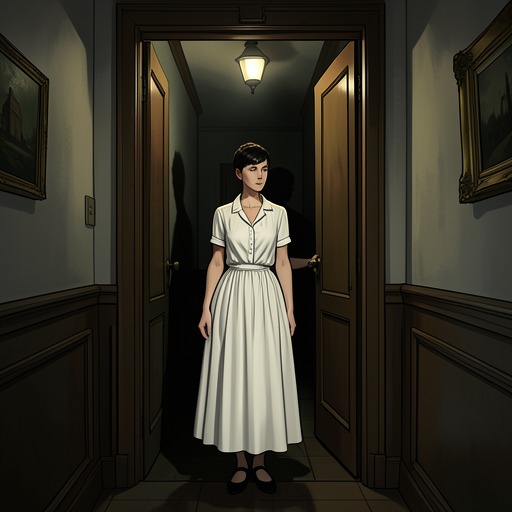
Other People“When the past is forgotten, the present is unforgettable” names the perceptual paradox at the center of Mary’s amnesia. Without access to her past, Mary does not experience the present as one moment in a continuous personal history; instead, its details arrive with striking precision and immediacy. The phrase describes both what her memory has lost and what her altered attention makes newly vivid.
Meaning and Context
The expression appears as the culmination of a description of Mary’s perception. The narrator says that, not yet stretched by time, she encounters things without seriality: her impressions are multiform, instantaneous, and random, like the present itself. An unknown street is not merely a blur of shapes and movement to her. She notices a window and the face behind it, the paving-stone grid, the rake of drainpipes, and how the shadows correspond to the skyscape.
The same exactness applies to her own body. Looking at her palm, she perceives the countless scratched contours of its surface rather than only its central grooves. She knows precisely how often she has looked at each hand: 113 times at the left and 97 at the right. She can also compare a veil of smoke slipping from a doorway with the particular flourish of a blanket as she strips her bed. Small particulars remain available to her even when the personal past that might organize them does not.
The Present Without Continuity
The sentence draws its force from a contrast, not from a simple celebration of heightened awareness. Mary’s perceptions are unusually rich, but she knows hardly anything about time or other people. She can tell what time it is without looking, yet this practical accuracy does not amount to understanding time. The distinction separates immediate perception from the knowledge and relationships that ordinarily give experience continuity.
The narrator presents Mary’s condition as carrying an advantage as well as a deprivation. Her attention can register a street, a hand, or a wisp of smoke with exceptional specificity; but these details do not restore her lost history or supply knowledge of others. The present is unforgettable in the sense that it is intensely apprehended, not because it resolves the questions of identity that her amnesia has left open.
Narrative Significance
The phrase condenses the passage’s account of Mary’s altered consciousness into a memorable reversal: forgetting does not make experience blank; it makes the immediate world newly prominent. The precise hand-counts and unexpected comparison between smoke and a blanket show that this vividness is expressed through particular observations, rather than through abstract reflection about memory.
Its placement also connects perception to Mary’s gradual recovery. The narrator says she is gaining ground fast, and that she will gain ground quickly under the Bothams’ care. The expression therefore holds together a temporary capacity and an ongoing change: Mary’s present-focused attention is part of her condition, while her progress suggests that the condition—and her relation to what she has lost—may develop. The sentence does not claim that the past has ceased to matter; it shows how powerfully the present occupies the space left by its absence.